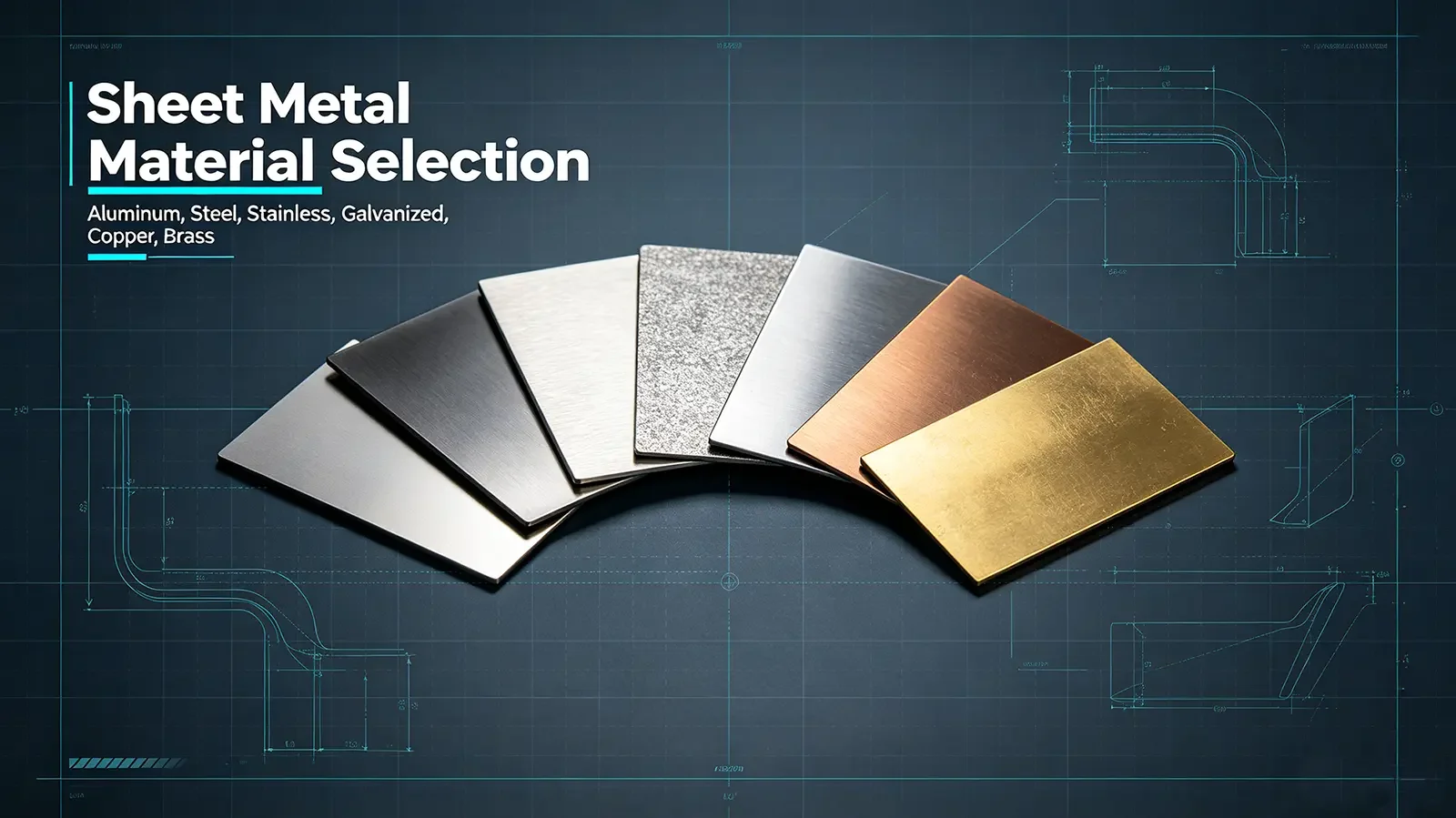
Choosing a sheet metal material is a system decision
Material selection affects far more than whether a part survives a static load. It changes bend radii, springback, tooling, welding procedure, corrosion behavior, surface finish, flatness, tolerance capability, lead time, and total part cost.
That is why a single ranking such as “strongest,” “lightest,” or “most corrosion-resistant” rarely produces the best answer. A light alloy may need a thicker section for stiffness. A corrosion-resistant alloy may still pit in a chloride-filled crevice. A low-cost sheet may become expensive once pretreatment, coating, masking, and inspection are added.
The useful question is not “Which material is best?” It is “Which material condition has the lowest technical and manufacturing risk for this drawing and this service environment?”
1. Filter the choices in the right order
Start with requirements that can disqualify a material. Only compare price after the technical and manufacturing filters are clear.
Service environment
List moisture, salts, cleaning chemicals, process fluids, temperature, UV exposure, hygiene requirements, and expected service life. “Outdoor” is not enough detail: a sheltered inland enclosure and a road-salt-exposed bracket are both outdoor parts but have very different corrosion demands.
Loads, stiffness, and weight
Separate strength from stiffness. Steel is much stiffer than aluminum at the same thickness, while aluminum is much lighter. A weight-driven design can often recover stiffness through beads, ribs, flanges, deeper sections, or additional thickness. Buckling, vibration, fatigue, bearing at fasteners, and dent resistance may control before simple yield strength does.
Fabrication route
Identify every operation: laser cutting, punching, deep drawing, press-brake bending, hemming, hardware insertion, tapping, welding, brazing, adhesive bonding, grinding, and finishing. The alloy and temper must work with the tightest bend, deepest draw, smallest flange, and most heat-sensitive joint—not just the flat blank.
2. Aluminum sheet: low mass, but temper matters
5052-H32 for formed sheet parts
5052-H32 is a common starting point for bent aluminum enclosures, covers, tanks, and general fabricated sheet parts. It combines useful strength, good formability, weldability, and good general corrosion resistance. It is a non-heat-treatable aluminum-magnesium alloy; the H32 temper comes from strain hardening followed by stabilization.
For bends, still specify the inside radius, thickness, and grain direction. “5052” by itself is not enough because temper and thickness change the forming limit.
6061-T6 when strength or machining matters
6061-T6 is useful for machined panels, structural brackets, and parts that benefit from higher strength. It is not the default choice for tight press-brake bends. The T6 condition is less forgiving than 5052-H32, so larger radii or a different temper and process route may be necessary. Welding also reduces the heat-treated properties in the heat-affected zone unless the assembly receives a suitable post-weld treatment.
3003-H14 for formability at lower strength
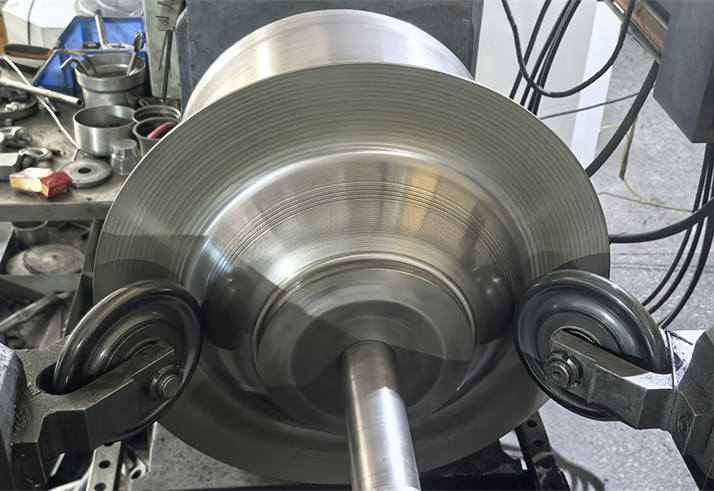
3003 is an aluminum-manganese alloy, not commercially pure aluminum. In H14 it is widely used for panels, HVAC components, spun parts, and moderately formed shapes where high strength is not the main requirement. For very deep drawing, a softer temper may be more appropriate than H14.
3. Carbon steel sheet: efficient when corrosion is managed
Cold-rolled carbon steel is often the most economical path for brackets, chassis, cabinets, and stamped parts. It offers high stiffness, familiar welding processes, broad supply, and a clean surface suitable for many coatings.
Avoid specifying the obsolete A366 label as a general material shortcut. ASTM A1008/A1008M covers current cold-rolled carbon, structural, high-strength low-alloy, and several specialized sheet designations. The drawing should identify the required designation or grade, thickness, finish condition, and any mechanical properties that matter.
Bare carbon steel will rust in humid or outdoor service. Treat the coating as part of the design: consider edge coverage, drain paths, threaded areas, weld seams, grounding points, masked surfaces, and damage during assembly.
4. Stainless steel: select for the actual corrosion mechanism
304/304L for broad general service
304 and 304L are common austenitic stainless grades with good formability, weldability, and corrosion resistance across many indoor, food-equipment, architectural, and general industrial applications. They work-harden during forming and show more springback than mild steel, so bend tooling and allowances should be planned accordingly.
316/316L when chlorides raise the risk
Molybdenum-bearing 316 and 316L generally resist chloride pitting better than 304, but they are not immune to saltwater, crevices, high temperature, or aggressive cleaning chemicals. A vague label such as “marine grade” is not an engineering exposure definition. Concentration, temperature, oxygen, crevice geometry, surface condition, and cleaning frequency all matter.
430 for ferritic, magnetic applications
430 is a ferritic stainless steel. It is magnetic, avoids nickel as a major alloying addition, and can be economical for appliances, trim, and mildly corrosive indoor service. Its corrosion resistance, forming behavior, and welding response differ from 304, so it should not be treated as a drop-in substitute.
5. Galvanized steel: specify both the steel and the zinc coating
Hot-dip galvanized sheet under ASTM A653/A653M combines a steel substrate with a zinc or zinc-iron coating. The coating provides sacrificial protection and can be cost-effective for HVAC, outdoor enclosures, appliances, and other fabricated products.
The coating does not remove fabrication constraints. Cutting exposes edges. Welding changes or destroys zinc near the joint and produces fumes that require appropriate controls. Welding procedures, ventilation, coating removal where required, and restoration of damaged areas must follow the applicable process and safety requirements. Paint over galvanized sheet also needs a compatible pretreatment system.
6. Copper and brass: use the alloy, not the color, as the specification
C110 copper is widely used where electrical or thermal conductivity dominates. C260 cartridge brass is common for formed terminals, springs, hardware, and decorative parts. Copper and brass are both much denser than aluminum and are usually more expensive than carbon steel, so they tend to be selected for a specific functional or visual reason.
Temper strongly affects forming. Cold work increases strength and reduces ductility; some parts need annealing between severe forming stages. Brass also varies by zinc content and phase structure, which changes cold formability, machinability, and corrosion behavior. Do not specify “brass sheet” without an alloy and temper.
Quick material comparison
The table below is deliberately qualitative. Actual properties vary with grade, temper, thickness, product form, supplier, and governing specification.
|
Material |
Good fit |
Fabrication notes |
Environmental and finish notes |
|
5052-H32 aluminum |
Bent enclosures, panels, tanks, marine-adjacent hardware |
Good sheet formability; verify grain direction and radius |
Good general corrosion resistance; isolate from dissimilar metals in wet service |
|
6061-T6 aluminum |
Machined or stiff structural parts with limited forming |
Higher strength than 5052, but tight bends are crack-sensitive; larger radii are typical |
Good general corrosion resistance; heat from welding reduces local T6 properties |
|
ASTM A1008 cold-rolled steel |
Low-cost brackets, chassis, cabinets, formed components |
Good stamping, bending, and welding depending on designation |
Usually needs paint, powder, plating, or another corrosion system |
|
304/304L stainless |
Food equipment, cleanable housings, general corrosion service |
Work-hardens and springs back more than mild steel; use stainless tooling practices |
Good broad-use resistance, but not immune to chlorides or crevices |
|
316/316L stainless |
More demanding chloride exposure and chemical service |
Similar forming behavior to 304; welding and finish details still matter |
Better pitting resistance than 304 in many chloride conditions; verify the actual environment |
|
ASTM A653 galvanized sheet |
HVAC, outdoor enclosures, appliance and general coated-sheet work |
Coating changes welding and painting procedures |
Zinc protects steel, but cut edges and weld areas need deliberate treatment |
|
C110 copper / C260 brass |
Electrical conductors, springs, terminals, decorative components |
Temper controls bendability; both can work-harden |
Dense and relatively costly; decide whether patina or tarnish is acceptable |
7. Check galvanic corrosion at mixed-metal joints
Dissimilar metals do not automatically corrode just because they touch. Galvanic corrosion requires an electrical path and a shared electrolyte. Risk depends on the metal pair, exposed area ratio, electrolyte conductivity, temperature, coating condition, crevices, and how long the joint stays wet.
A common example is a stainless fastener in aluminum. In a dry indoor assembly, the risk may be low. In a wet chloride environment, corrosion can concentrate in the aluminum near the joint. Design controls include compatible coatings, nonconductive washers and sleeves, sealants, drainage, and avoiding a small anodic area coupled to a large cathodic area.
8. Treat finishing as part of material selection
The substrate and finish should be selected together. A coating that performs well on one metal may need a different pretreatment on another. Geometry can also limit coverage at edges, recesses, threads, welds, and blind cavities.
Carbon steel: powder coating, liquid paint, e-coat, and metallic plating can all work, but surface preparation and edge protection control real performance.
Aluminum: anodizing changes the oxide layer; conversion coatings and pretreatments can support paint or powder systems. Alloy and temper can affect cosmetic consistency.
Stainless steel: passivation removes free iron and supports formation of a clean passive surface. It is not the same as removing heavy oxide scale or weld heat tint; cleaning, pickling, or mechanical treatment may be required first.
Galvanized steel: use a coating system designed for zinc surfaces and define how cut edges, welds, scratches, and field repairs will be handled.
9. Put the decision on the drawing
A reliable material callout is more than a trade name. Depending on the part, the drawing or purchasing specification should state:
- Material standard, grade or alloy, and temper or condition.
- Thickness and tolerance; do not rely only on gauge terminology across different metals.
- Grain direction when it affects bending, cosmetic brushing, or fatigue.
- Minimum inside bend radius and any critical form features.
- Surface finish, pretreatment, coating type, color or texture if applicable, and acceptance criteria.
- Coating weight, case, plating thickness, or anodize class where required.
- Weld process or post-weld treatment requirements when corrosion or strength depends on them.
- Material certification, restricted-substance, traceability, or regulatory requirements.
- Inspection method for thickness, hardness, coating, corrosion test, conductivity, or cosmetic appearance.
|
Prototype the highest-risk feature If the design contains a tight bend, deep draw, cosmetic Class A surface, mixed-metal joint, demanding weld, or unfamiliar coating system, validate that feature at production thickness and temper before releasing tooling or a large order. |
Common selection mistakes
- Choosing by alloy family but omitting temper or product condition.
- Comparing yield strength while ignoring stiffness, buckling, and dent resistance.
- Assuming 6061-T6 bends like 5052-H32 because both are aluminum.
- Using 316 stainless as a universal answer to every chloride environment.
- Specifying galvanized steel without a coating designation or a repair plan for welds and cut areas.
- Selecting a finish after the part geometry and joining method are already frozen.
- Using a star-rating table as if cost, weldability, or corrosion resistance were fixed material constants.
Frequently asked questions
What is the best aluminum for a bent enclosure?
5052-H32 is a common choice because it balances formability, strength, weldability, and corrosion resistance. That does not eliminate the need to confirm bend radius, grain direction, thickness, and cosmetic finish.
Should I use 304 or 316 stainless outdoors?
It depends on the exposure. 304 can perform well in many mild outdoor environments. 316 generally offers better resistance to chloride pitting, but coastal spray, de-icing salts, crevices, temperature, and cleaning practices still need to be evaluated.
Is galvanized steel the same as stainless steel?
No. Galvanized steel is carbon or structural steel protected by a zinc-based coating. Stainless steel obtains corrosion resistance from its chromium-rich passive surface. They behave differently when cut, welded, formed, scratched, and exposed to heat or chemicals.
Can material cost be compared by price per pound?
Not reliably. Compare finished-part cost: density, required thickness, scrap, bend and tooling limits, cycle time, welding, hardware, pretreatment, coating, inspection, maintenance, and expected service life all affect the result.
Final takeaway
Good sheet metal material selection starts with service and geometry, then works through mechanics, fabrication, joining, corrosion, finishing, supply, and verification. The correct answer is usually a specific alloy or grade in a specific temper or condition—not a broad label such as aluminum, steel, or stainless.
When the choice is close, prototype the feature most likely to fail and document the result. A short bend trial, weld coupon, coating sample, or corrosion review costs far less than discovering after release that the material and the process were never compatible.
References and further reading
ASTM International. ASTM A1008/A1008M — Cold-Rolled Steel Sheet.
ASTM International. ASTM A653/A653M — Zinc-Coated and Galvannealed Steel Sheet.
ASTM International. ASTM A380/A380M-25 — Cleaning, Descaling, Pickling, and Passivation of Stainless Steel.
Outokumpu. Core range stainless steel datasheet. Grade characteristics for 304, 316, and ferritic stainless steels.
Federal Aviation Administration. AC 43.13-1B — Acceptable Methods, Techniques, and Practices. Includes bend-radius guidance showing the importance of alloy, temper, thickness, and grain direction.
American Galvanizers Association. Welding galvanized steel. Welding preparation, fume considerations, and coating restoration.
Copper Development Association. Brass structures and properties.