
We’ve seen hundreds of drawing errors caused by vague notes like “1.5 mm steel” or “anodized aluminum”. These incomplete descriptions leave critical details (grade, temper, grain direction, coating) open to misinterpretation.
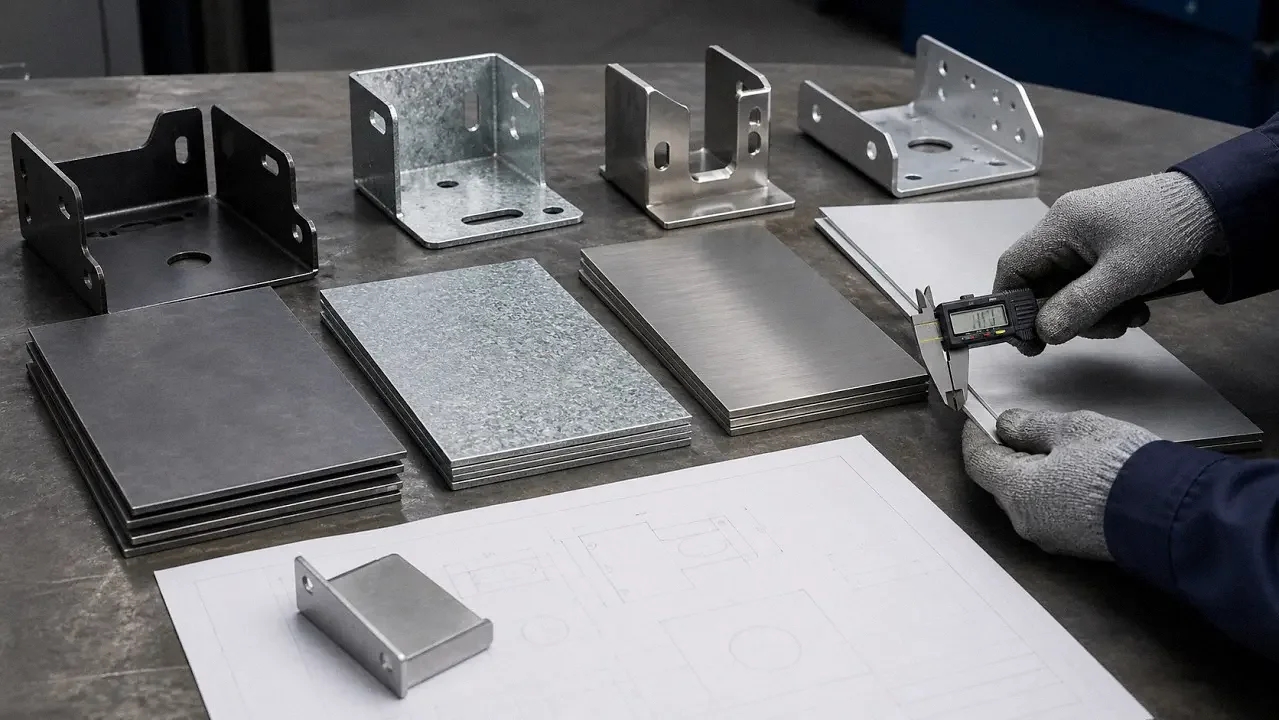
Material selection starts with the service need and the process route
1. Start With Service & Fabrication Requirements
Before comparing carbon steel, stainless steel or aluminum, define all operating conditions your finished component must withstand. Indoor office cabinets and coastal electrical enclosures can look nearly identical, yet require drastically different corrosion protection. Washdown equipment introduces additional risks from harsh cleaning agents.
Fabrication constraints cannot be overlooked: alloys suitable for machining may crack during tight-radius brake bending. Pre-coated sheet avoids storage rust but needs careful handling around welds and cut edges. Parts with cosmetic surfaces require grain direction planning and protective film consideration from the start.
A complete material specification covers six core areas:
- Environment: Indoor / outdoor / coastal / washdown use, operating temperature, chemical exposure
- Function: Load bearing, stiffness, impact resistance, weight limits, thermal transfer, EMI shielding, grounding
- Fabrication: Laser cut / punching, bend quantity, minimum bend radius, welding style, hardware insertion, production volume
- Appearance: Visible exterior faces, grain consistency, color, gloss, acceptable scratch tolerance
- Finish: Powder coat, liquid paint, plating, passivation, brushed finish, anodize, conversion coating
- Commercial factors: Stock availability, minimum order quantity, lead time, total part fabrication cost
Use Decimal Thickness, Not Gauge Numbers
Gauge sizing differs across metal families and creates purchasing confusion. For example, 18-gauge carbon steel ≈ 0.0478 in, while 18-gauge stainless ≈ 0.0500 in. Always write exact mm or inch decimal thickness on drawings to eliminate errors.
Density & Weight Comparison Table
| Material Family | Approximate Density | Key Design Tradeoff |
|---|---|---|
| Carbon steel | 0.283 lb/in³ (7.85 g/cm³) | Highest stiffness per dollar; mandatory anti-rust coating |
| 304 stainless steel | 0.289 lb/in³ (8.0 g/cm³) | Nearly same weight as mild steel; built-in corrosion resistance, stricter surface rules |
| Aluminum sheet | 0.097 lb/in³ (2.7 g/cm³) | 1/3 the weight of steel; lower rigidity needs thicker panels or reinforcing ribs |
2. Carbon Steel Types: Cold Rolled / Galvanized / HRPO
The single word “steel” covers multiple substrate and coating variants, each with unique forming, welding and finishing behavior.
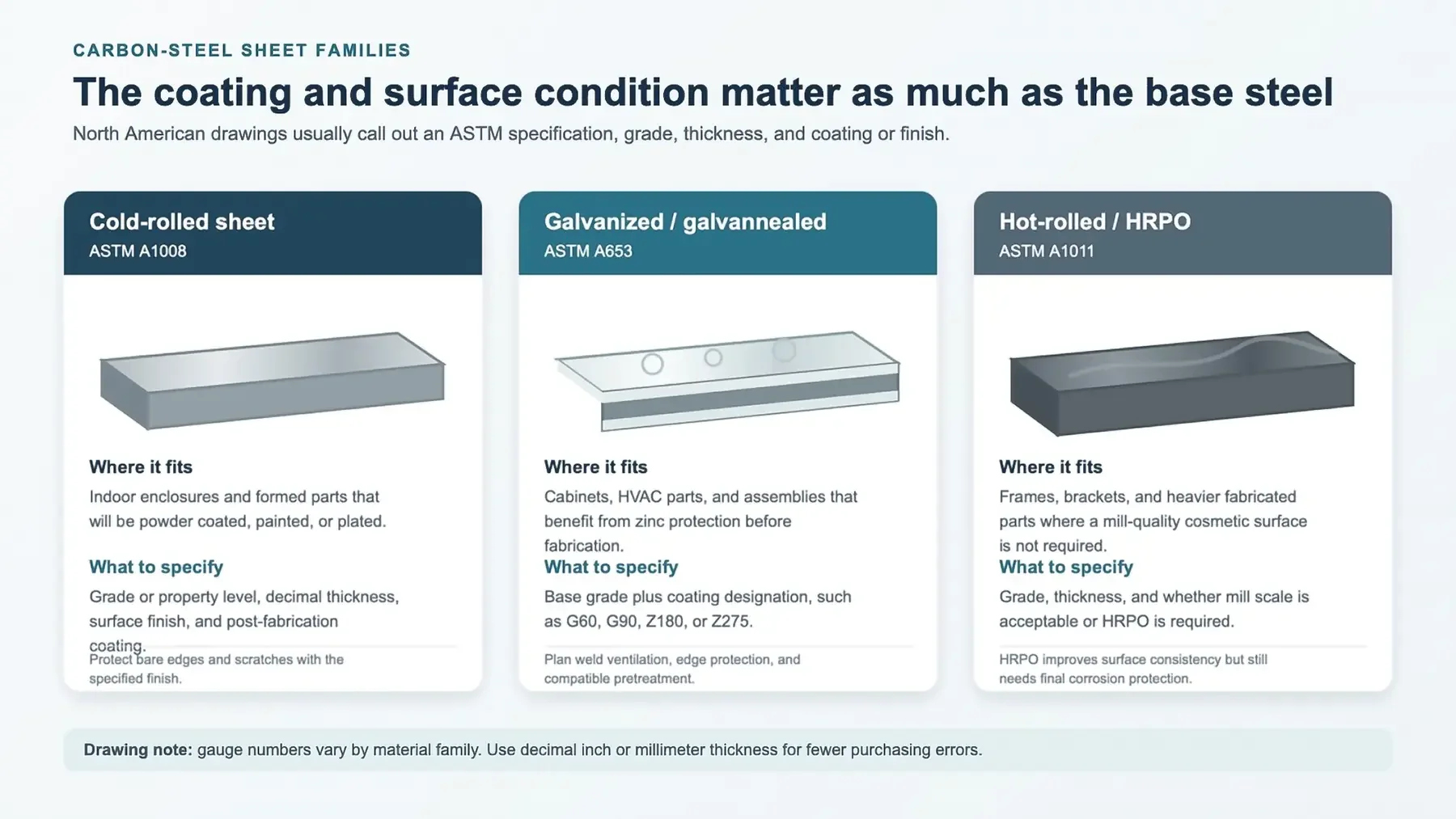
Cold-rolled, galvanized, and hot-rolled sheet solve different fabrication problems
ASTM A1008 Cold-Rolled Steel
ASTM A1008 cold-rolled steel acts as the standard baseline material for indoor brackets, equipment covers and powder-coated cabinets. It features smooth surfaces and precise thickness tolerances, which enable clean cosmetic finishes and consistent, repeatable brake forming.
This specification includes several distinct material grades: Commercial Steel (CS), Drawing Steel (DS), Structural Steel, and HSLA high-strength low-alloy steel. If your design requires a fixed yield strength value, do not simply label material as “A1008 CS Type B” on drawings. You must clearly mark structural or HSLA grades to avoid fabrication errors. Uncoated bare cold-rolled steel needs full anti-corrosion protection applied to all weld zones, surface scratches, and folded hems.
ASTM A653 Galvanized / Galvannealed Steel
ASTM A653 hot-dip zinc coated sheet is engineered for outdoor cabinets and enclosures used in high-humidity environments. Markings G60 and G90 stand for total zinc coating weight on both sides of the sheet; G90 equals 275g/m² (equivalent to Z275 coating standard).
Electrogalvanized steel under ASTM A879 provides a thin, spangle-free zinc layer ideal for high-end painted surfaces. Galvannealed zinc-iron alloy sheets deliver better weldability than traditional galvanized steel. One critical detail for design drawings: the single term “galvanized” is insufficient. Drawings need to define the exact coating grade, weld touch-up procedures, and edge corrosion protection requirements.
ASTM A1011 Hot-Rolled & HRPO Steel
Raw hot-rolled steel from ASTM A1011 works well for heavy-duty frames and base plates where raw mill surface texture is acceptable. HRPO, short for Hot Rolled Pickled & Oiled, strips away rough mill scale and adds a thin protective oil film for storage. This oil coating must be completely removed via degreasing before any paint or powder coating application.
A key point to note: formability differs drastically across all strength grades within ASTM A1011. The HRPO process only upgrades surface smoothness — it does not improve the material’s bending capability.
3. Stainless Steel: 304L, 316L & 201 Grade Limitations
ASTM A240 governs specifications for stainless steel sheet and plate. For welded assemblies, low-carbon 304L stainless steel reduces intergranular weld sensitization and limits corrosion along weld seams. Even with this benefit, 304L remains vulnerable to surface staining when exposed to chlorides, trapped moisture, or embedded carbon steel particles.
316L contains added molybdenum to deliver enhanced resistance to chlorides such as coastal salt spray and bleach washdown environments. While 316L carries a higher material cost, inadequate drainage at joints can eliminate its corrosion resistance benefits — no premium alloy can compensate for poor design geometry.
201 stainless steel reduces nickel content to lower material expense. The tradeoff is weaker corrosion resistance and elevated work hardening, which generates increased springback during brake forming. This grade is only acceptable for fully dry indoor applications and requires complete material performance qualification prior to production.
Myth Busting: Magnet testing cannot reliably identify stainless steel grades. Cold working causes austenitic stainless steel to develop mild magnetic properties. Portable handheld XRF analyzers can detect molybdenum content to distinguish between 304 and 316, yet they are unable to verify low-carbon “L” variants. Material Test Reports (MTRs) are the authoritative source for grade validation.
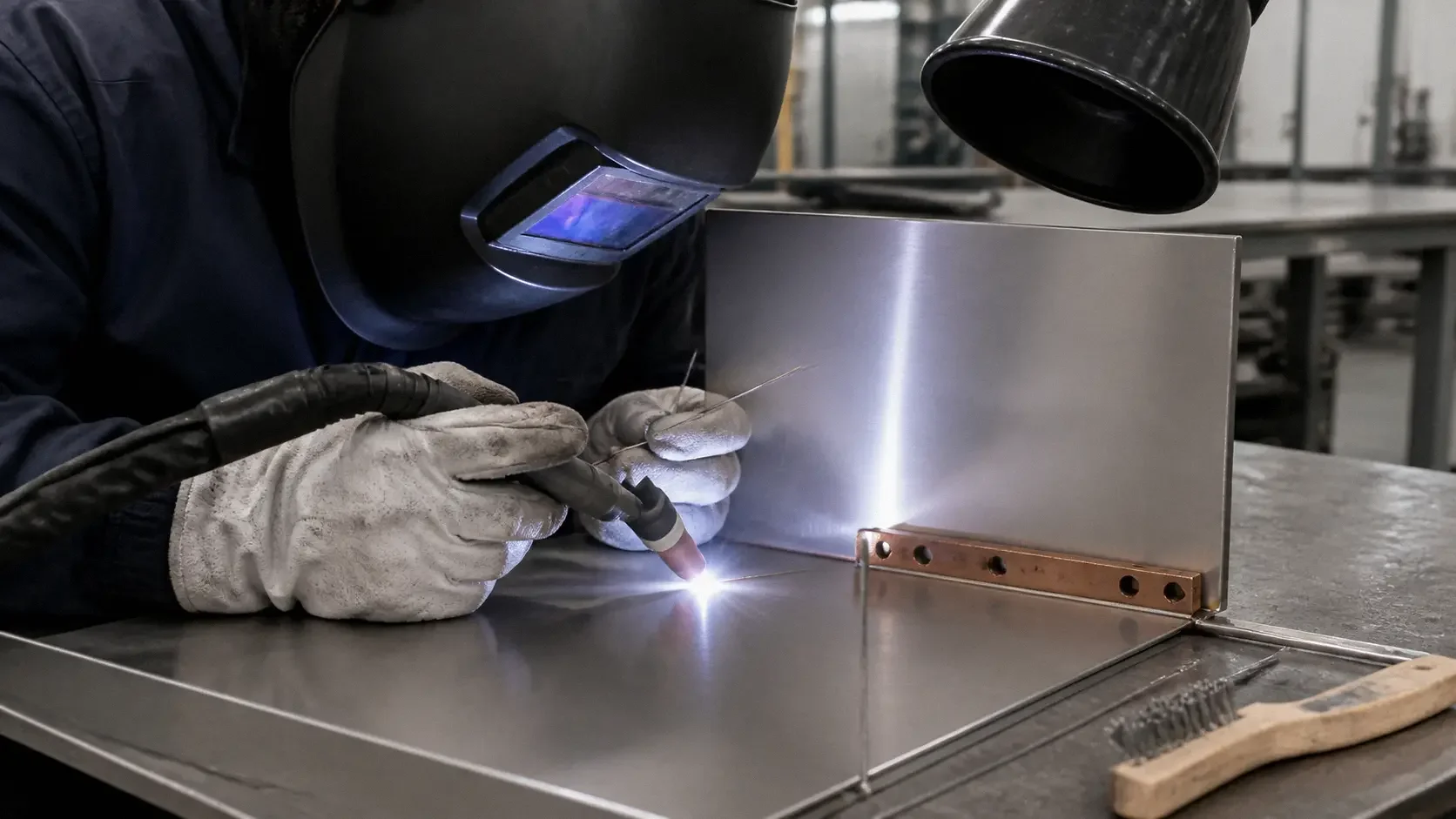
Controlled fit-up and heat input help preserve stainless appearance and corrosion margin
4. Aluminum Alloys: 5052-H32 vs 6061-T6
Any valid aluminum material specification must include both the alloy grade and temper designation. Simply labeling a drawing as just “aluminum” leaves fabricators without clear processing guidance. ASTM B209 sets the official standard for all aluminum sheet and plate products.
5052-H32 – Top Pick for Brake-Formed Enclosures
5052-H32 delivers balanced formability, weldability and moderate corrosion resistance, making it ideal for lightweight equipment cabinets, protective covers and electrical housings. It features a yield strength of approximately 28 ksi and offers forgiving brake forming performance for most standard enclosure thicknesses.
The minimum allowable inside bend radius varies based on sheet thickness, grain orientation and surface finish. Do not rely on a one-size-fits-all R=t rule for all bending applications.
6061-T6 – For Machined Structural Components
6061-T6 boasts a higher yield strength of roughly 35 ksi, which suits machined mounting plates, heat sinks and structural support brackets. The T6 temper cracks more easily when formed with tight bend radii. Additionally, its mechanical strength drops significantly within weld heat-affected zones (HAZ) unless post-weld heat treatment is performed.
7075-T6 – Rarely Applied for Standard Sheet Fabrication
7075-T6 provides exceptional tensile strength yet suffers from poor ductility and limited fusion weld compatibility. This grade should only be specified for highly customized, weight-critical structural components, and it is not recommended for regular brake-formed enclosures.
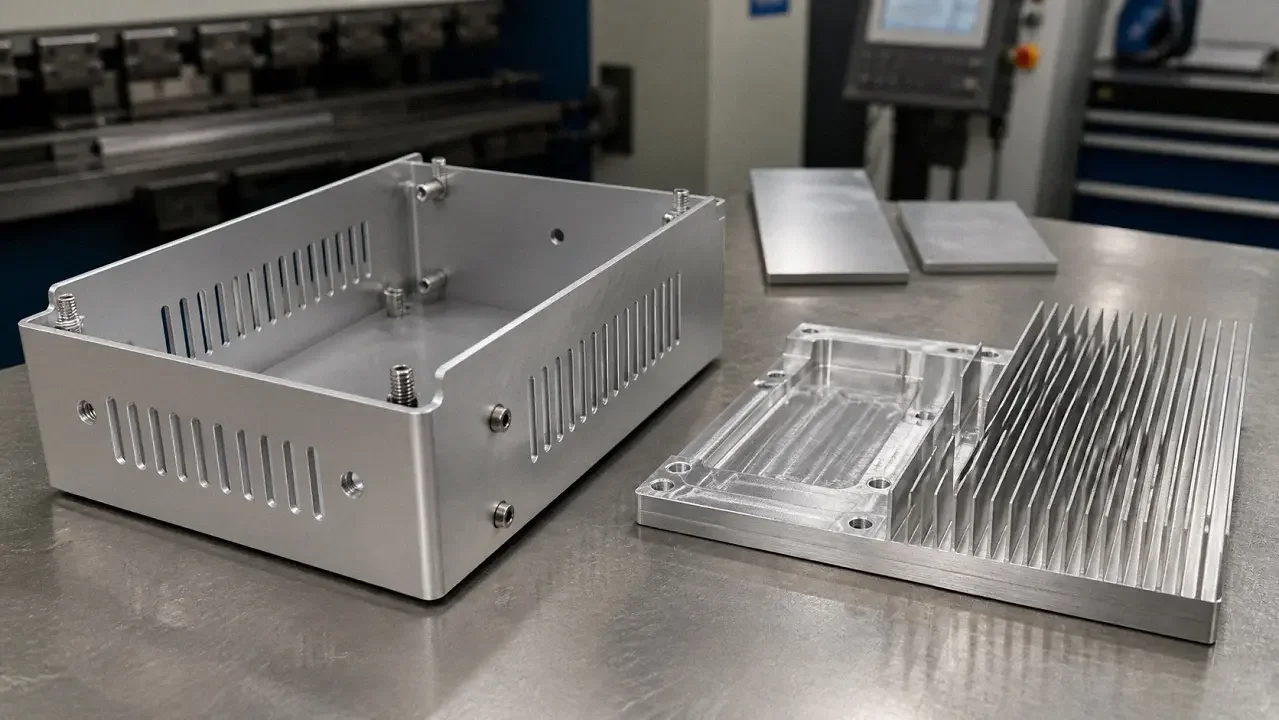
5052-H32 and 6061-T6 often belong in different parts of the same assembly
5. Bending Rules For All Sheet Metal Materials
Air bending performance varies significantly depending on alloy, temper, material thickness and V‑die opening dimensions. Springback, required press tonnage and minimum inside bend radius cannot be directly transferred between carbon steel, stainless steel and aluminum grades.
| Material | Recommended V-Die Opening (t = sheet thickness) | Key Fabrication Notes |
|---|---|---|
| Mild / Cold Rolled Steel | 6–8 × t | Low springback; baseline press brake tonnage requirement |
| 304L / 316L Stainless | 8–10 × t | Higher tonnage demand and greater springback; protect grained cosmetic surfaces |
| 5052-H32 Aluminum | 6–8 × t | Avoid sharp punch nose radii; bend across the grain direction to prevent cracking |
| 6061-T6 Aluminum | Alloy-specific chart required | Requires larger inside bend radii than 5052‑H32 to prevent material splitting |
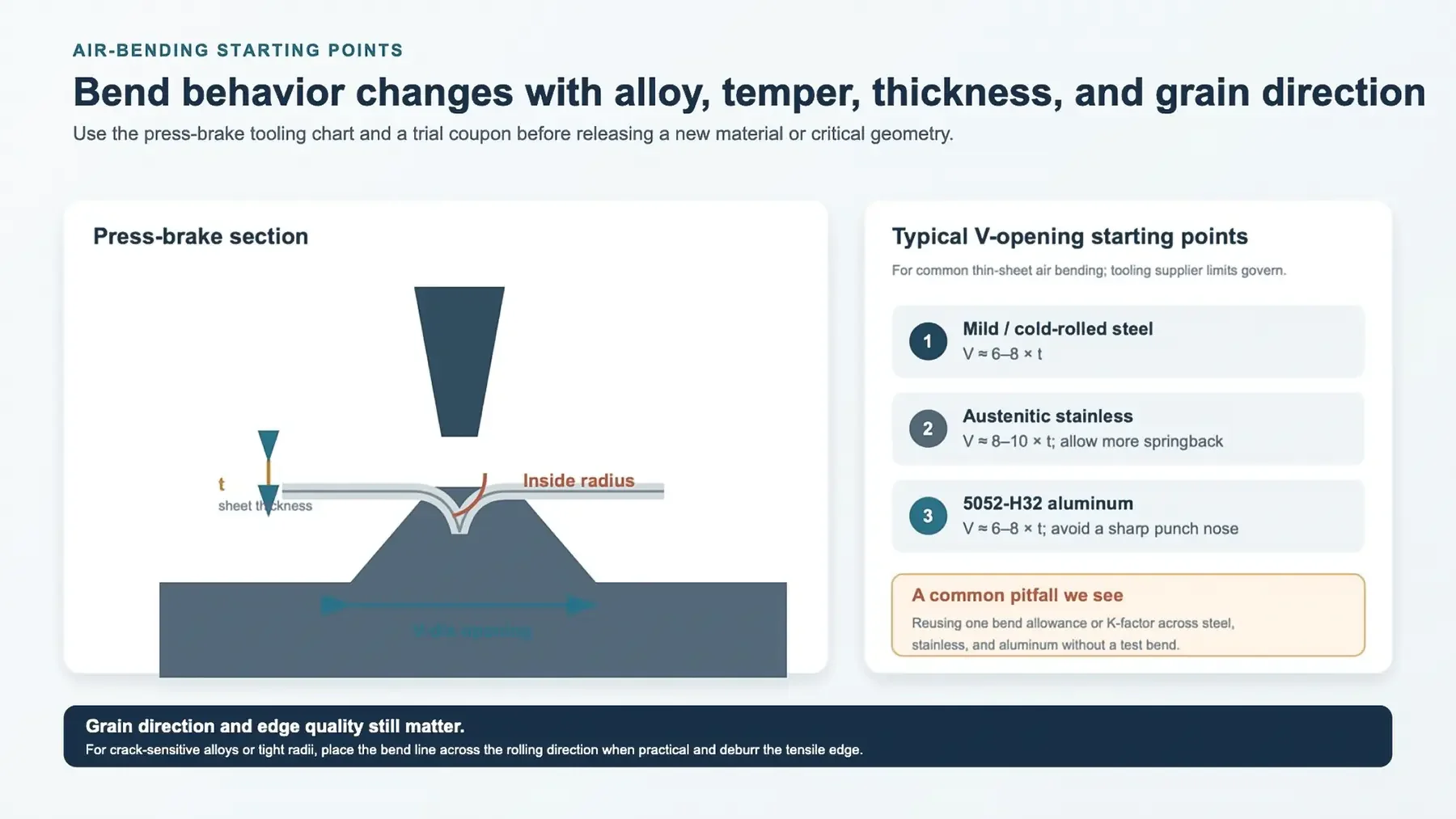
V-die opening and material behavior set the starting point for an air bend
Critical Fabrication Guidelines
- Bend allowance and K‑factor must be calibrated for each material grade using physical test coupons.
- Standard bend relief width equals nominal sheet thickness. Relief depth should extend past the bend tangent by a distance equal to inside bend radius + t.
- Typical laser cutting tolerance: ±0.005–0.010 in
- Typical linear tolerance for formed components: ±0.015–0.030 in
- Angular tolerance for bent features: ±1°
6. How Welding & Finishing Change Material Picks
Material grade and surface finish must be specified together on engineering drawings. Coatings formulated for cold rolled steel often deliver poor adhesion and premature failure when applied to galvanized steel or aluminum unless surface pretreatment processes are modified accordingly.
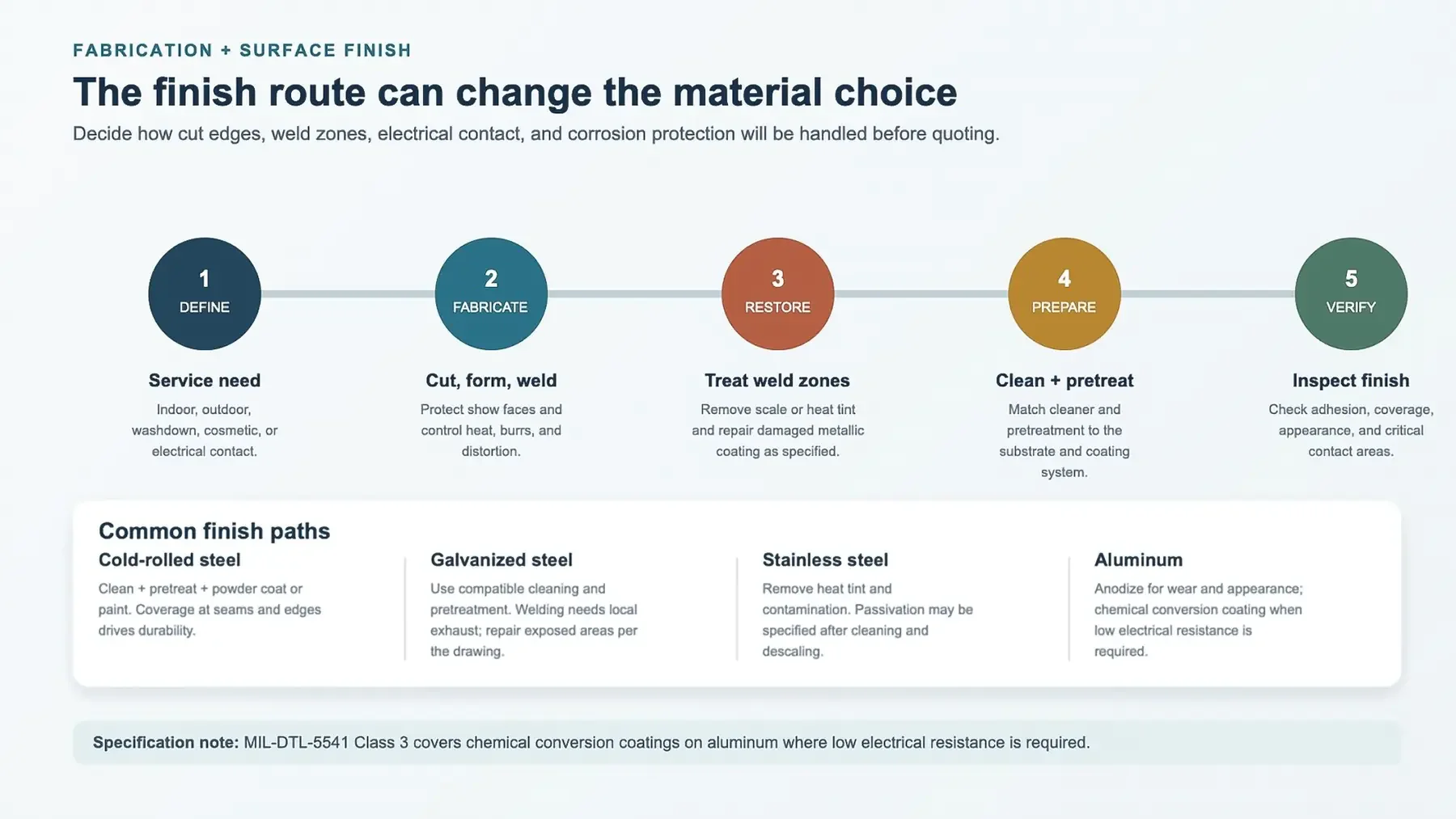
Surface finish decisions should be made before cutting and welding begin
- Galvanized Steel Welding: Welding generates hazardous zinc fumes requiring adequate local exhaust ventilation. Zinc vapor also creates risk of weld porosity. All welded regions require zinc-rich touch-up coating after fabrication to restore corrosion protection.
- Stainless Steel Finishing: Use abrasives dedicated exclusively to stainless steel to avoid carbon steel cross-contamination. Remove weld heat tint prior to passivation, in compliance with ASTM A380 and ASTM A967.
- Aluminum Finishing: Anodizing forms an electrically insulating oxide layer. Specify chemical conversion coating if surfaces require electrical conductivity for grounding or EMI shielding.
- Powder Coating Baseline Specification: Standard target dry film thickness: 2–4 mil (50–100 μm). Adjust design tolerances for threaded holes and narrow slots to account for coating build-up.
7. Real-World Material Selection Scenarios
Scenario 1: Low-Cost Indoor Control Cabinet
16/18 gauge ASTM A1008 cold rolled steel with certified powder coating provides the lowest total material cost for dry indoor service. Where internal condensation is expected, upgrade to ASTM A653 galvannealed sheet. Stainless steel or aluminum seldom deliver favorable cost performance unless regular aggressive washdowns or strict weight reduction requirements apply.
Scenario 2: Lightweight Outdoor Electronics Housing
Split material assembly: brake-formed 0.063 in 5052-H32 housing paired with machined 6061-T6 heat sink. Apply chemical conversion coating to support corrosion resistance and reliable electrical grounding. When stainless steel fasteners contact aluminum in humid outdoor environments, install insulating gaskets to prevent galvanic corrosion.
8. Incoming Material Receiving Inspection Checklist
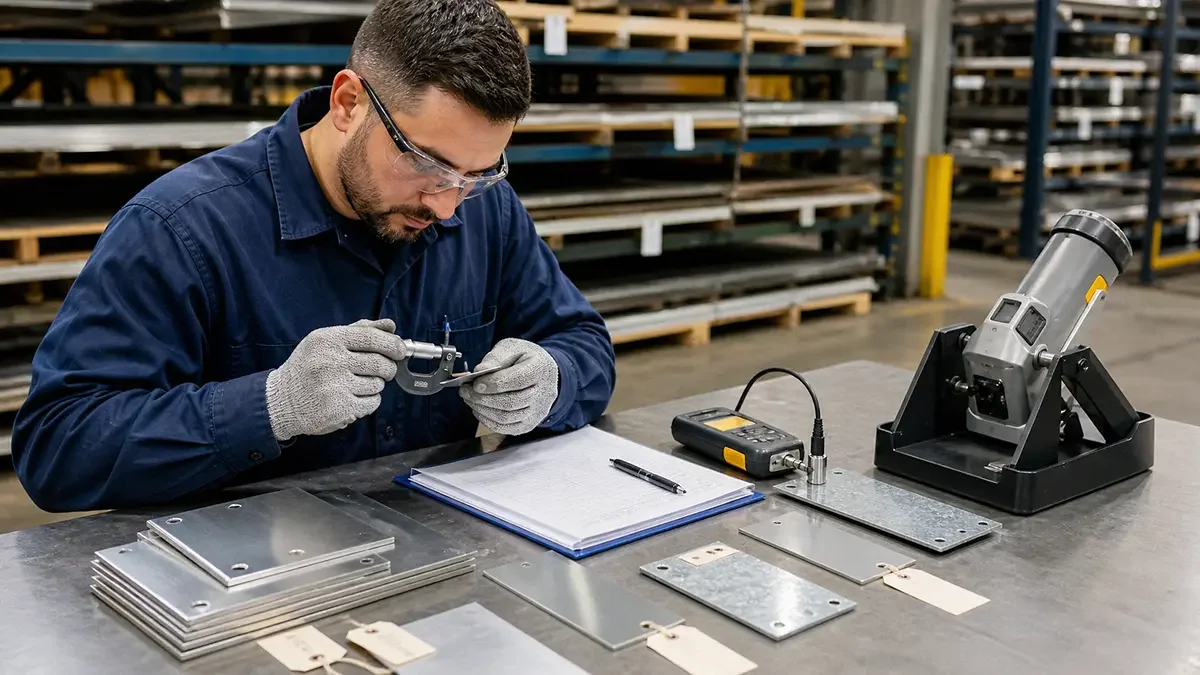
Incoming inspection closes the gap between a material note and the sheet on the floor
| Requirement | Inspection Method | Why It Matters |
|---|---|---|
| Alloy & Grade | MTR (Material Test Report); PMI XRF when specified | Prevents low-grade substitute metals that lead to rust or forming failure |
| Sheet Thickness | Measure multiple points per sheet with a micrometer | Governs bend radii, assembly fit-up and final part dimensions |
| Coating Weight | Dry film / zinc coating thickness gauge | G60 and G90 galvanized coatings offer different corrosion resistance and cannot be swapped |
| Temper Condition | Cross reference purchase order + MTR | T6 aluminum forms very differently compared to T4 or H32 |
| Cosmetic Grain | Match against approved physical sample | Misaligned grain creates uneven brushed surface appearance and increases bend cracking risk |
FAQ: Sheet Metal Material Selection
Final Summary
Selecting sheet metal materials is not a simple ranking of “strongest” or “cheapest” alloys. A reliable material specification accounts for service environment, forming performance, welding characteristics, surface finish and total production cost.
Always document alloy grade and temper, decimal thickness, coating specifications, surface grain requirements and acceptance criteria on engineering drawings. Test coupons for new material combinations before full production to avoid costly rework.